Sep 1, 2026 Epoch Times
“Can reducing carbon emissions really save the Earth?”
Nations around the world are pouring astronomical sums of money into the pursuit of carbon neutrality. They are expanding solar and wind power generation while demanding that corporations adopt ESG standards and cut carbon emissions. Yet, there is someone who argues that the very starting point of this massive transition is flawed.
That person is Lee Dong-yeop, co-CEO of Cleintel Korea, who has spent 15 years conducting climate change research and corporate consulting. Also the author of *Climate Jeong-eum*—a book that breaks down complex climate debates into terms easily understood by the general public—Lee admits that he once believed he was “saving the planet” through his work in this field. However, after working on numerous projects, he began to question the political interests and financial flows underlying climate policies.
The questions he raises are provocative: Is human-emitted carbon dioxide truly the primary culprit behind the climate crisis? Is the enormous cost of achieving carbon neutrality justified? What price do the environment and industry pay for the expansion of solar and wind power?
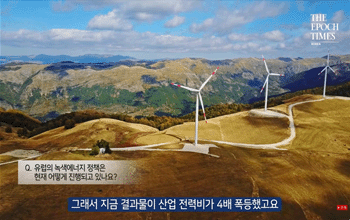
The debate extends to China as well. Lee observes that China—the world’s largest carbon emitter and the dominant force in solar and wind power supply chains—is emerging as the biggest beneficiary of the global “green transition.” Conversely, he warns that South Korea risks losing its competitiveness in manufacturing and the AI era due to the expansion of renewable energy and high industrial electricity rates.
Is the climate crisis a matter of science, or one of politics and money? Is carbon neutrality a solution for the planet, or a massive policy experiment designed to reshape the industrial order? We take a fresh look at the premises regarding the climate crisis and carbon neutrality that we have long taken for granted.